
Services / Heating Repair
Furnace & Heater Repair and Tune-Ups in Dallas
When a Dallas furnace quits, it usually picks the first hard freeze. We repair gas furnaces, heat pumps and electric heat around the clock, and tune them up each fall so they light the first time.
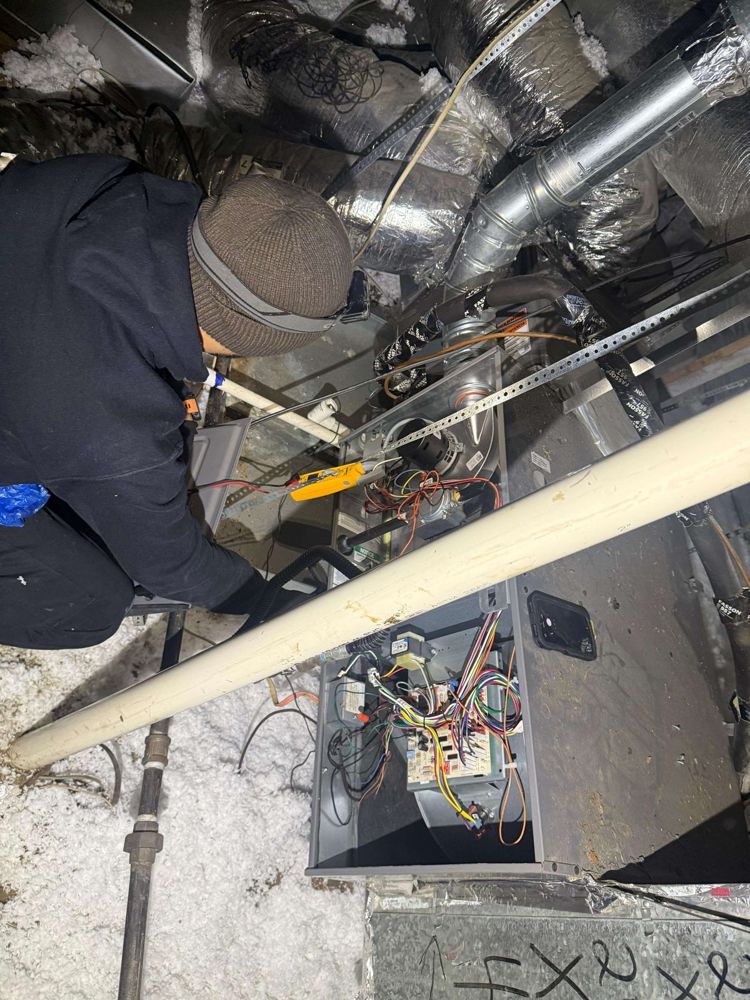
Heating repair for any system
Most of the year your furnace sits idle while the AC does the work. Then a front drops the temperature thirty degrees in an afternoon, and a worn part gives out. We diagnose first, show you what failed, and quote the repair before we start.
On gas furnaces, these are the repairs we make most:
- Hot surface ignitors. They get brittle and crack. No glow, no heat.
- Flame sensors. A thin coat of residue makes the furnace light, run a few seconds and shut down. Often a careful cleaning fixes it.
- Limit switches. A tripped limit usually points to airflow trouble, like a clogged filter or a failing blower.
- Inducer motors. Worn bearings squeal or rattle, and the furnace refuses to start.
- Pressure switches, control boards, blower motors and capacitors. Less common, but we see them every winter.
Electric strip heat fails at the sequencer, relay or heating element. Heat pumps have their own list, covered on our heat pump page. We work on all makes and models, including Trane, Carrier, Goodman, Lennox and Daikin.
Cracked heat exchangers and carbon monoxide
The heat exchanger is the metal wall between the burner flames and the air you breathe. If it cracks, exhaust gases, including carbon monoxide, can mix into your supply air.
A furnace that bakes in a 140-degree attic all summer and then fires hard in a freeze takes a beating. We check the heat exchanger on every repair visit. If we find a crack, we show you, shut the furnace down and go over your replacement options. We do not patch heat exchangers.
No carbon monoxide detector near the bedrooms? Put one in this week.
Check these five things before you call
- Thermostat. Set to Heat, above room temperature. Blank screen? Try fresh batteries.
- Power. Look for a tripped breaker, and make sure the light switch on or near the furnace is on.
- Filter. A filter packed with summer dust shuts a furnace down on its limit switch. Swap it and try again.
- Gas. If the stove or water heater is also out, the problem may be the gas supply.
- Drain. High-efficiency furnaces stop when the condensate drain clogs. Standing water in the pan is a clue.
Call right away if you smell gas (leave the house and call the gas company first), a carbon monoxide alarm sounds, a breaker trips every time the heat starts, or you have no heat in a freeze.
24/7 when the ice storm hits
A house with no heat in sub-freezing weather cannot wait until Monday. Our office is open seven days a week, 8 AM to 7 PM, and emergency heating repair is available 24/7.
While you wait, keep interior doors open so warm rooms share with cold ones, and let faucets drip to protect your pipes. Every repair is backed by our 100% satisfaction guarantee.
Fall tune-ups: the 8-point heating check
A furnace that has been off since March should not get its first test on a 20-degree night. Most January no-heat calls trace back to something a tune-up would have caught. Every heating tune-up follows the same checklist:
- Full inspection of the furnace and its assemblies
- Burner and ignition assembly inspected and adjusted
- Heat exchanger checked for cracks and damage
- Filter condition and airflow verified
- Connections inspected and tightened
- Flue draft measured and gas piping inspected
- Safety controls tested
- Flue pipe inspected
On a heat pump or electric air handler, the combustion items are swapped for checks of the defrost cycle, reversing valve, backup strips and refrigerant charge. Annual maintenance also keeps manufacturer warranties and our No Lemon guarantee in force.
Book in October or early November, before the first cold front. Through December 2026 a one-time tune-up is $90; see current promotions. The Tiger Family Membership is $15.99 a month and includes this heating tune-up, a spring AC tune-up, front-of-the-line scheduling and 10% off repairs up to $2,500.
Serving Dallas and North Texas
We are based at 17606 Preston Rd in Far North Dallas and repair heating systems across Dallas County and north into Collin and Denton counties, including Plano, Richardson, Addison, Carrollton, Frisco, Allen and McKinney. The 1970s and 80s homes around Richardson and North Dallas are the ones whose furnaces we watch closest. See the full service area, call 214-214-6922 or book online.